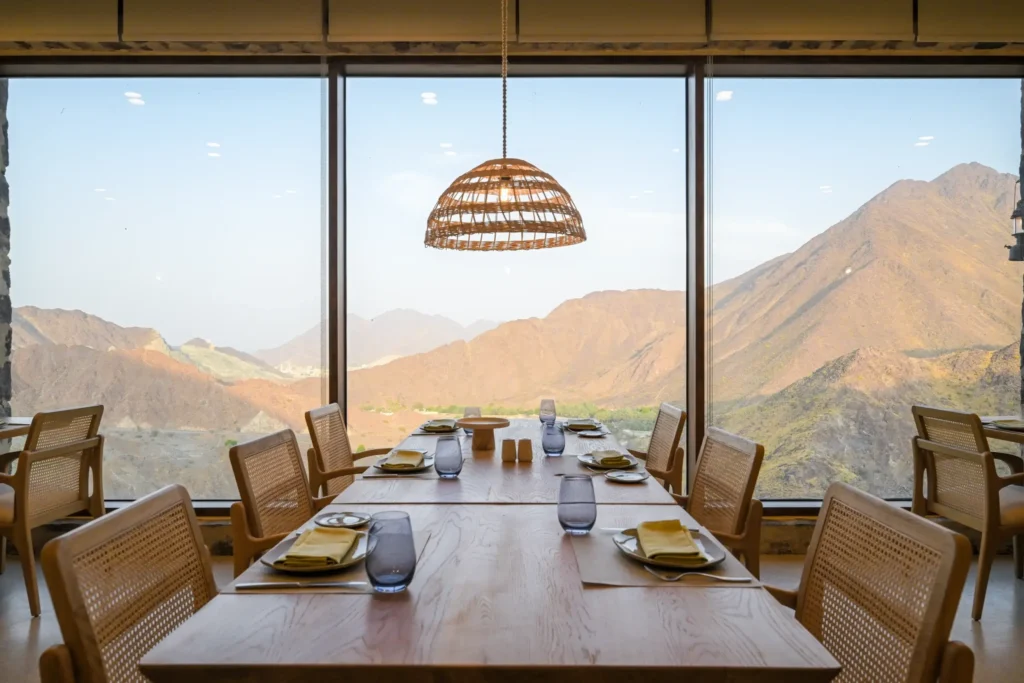

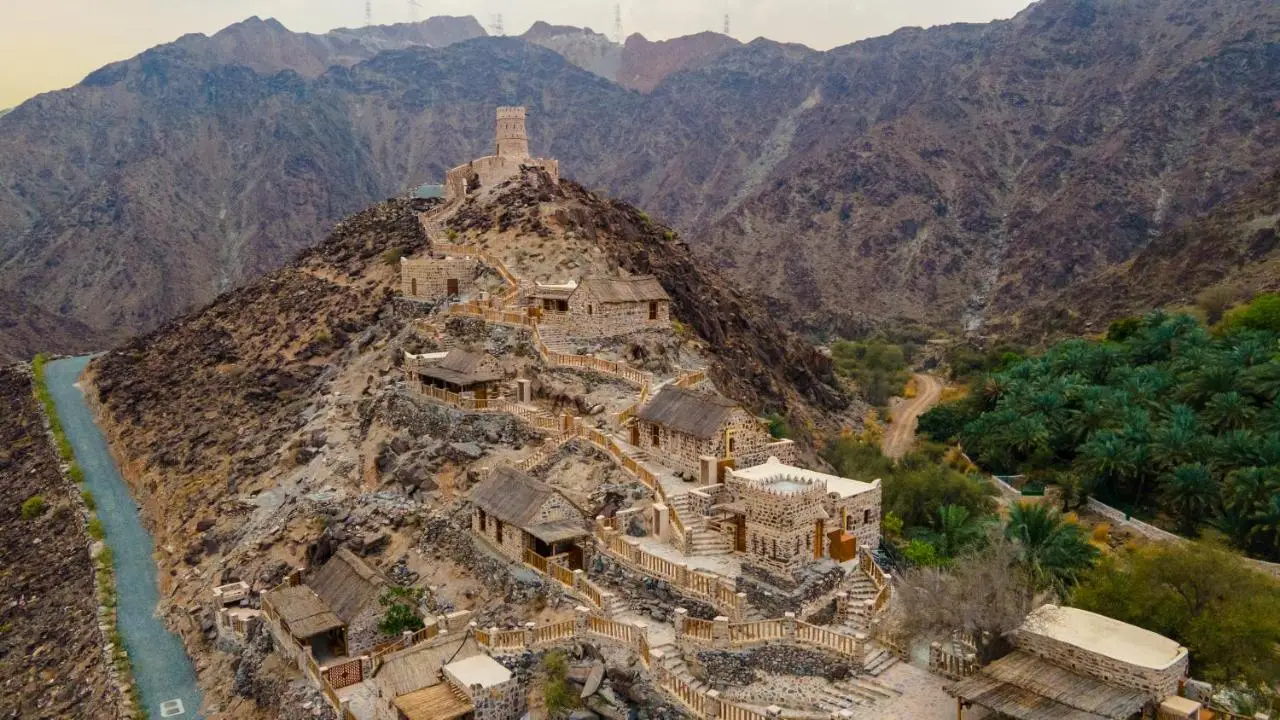
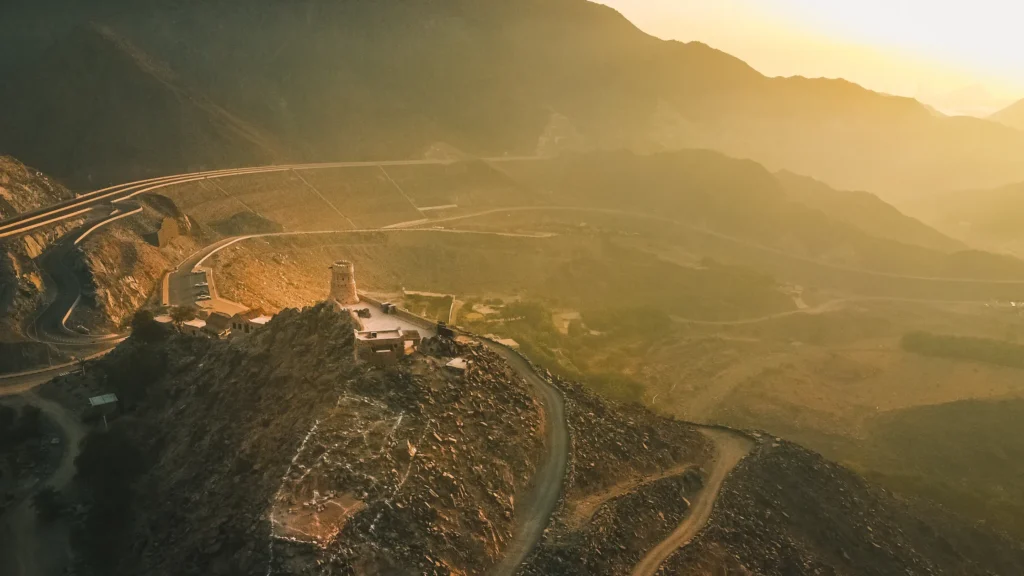
Looking across the mountains above Khorfakkan, Najd Al Meqsar Boutique Retreat begins with a question before it becomes a stay: why would anyone choose to build here? The restored stone houses appear high above the valley, held between ridges, exposed terrain, and open sky, in a location that still feels ambitious even by contemporary standards. That first impression creates more than visual admiration; it creates a quiet sense of awe toward the human decision to belong to such a demanding landscape.
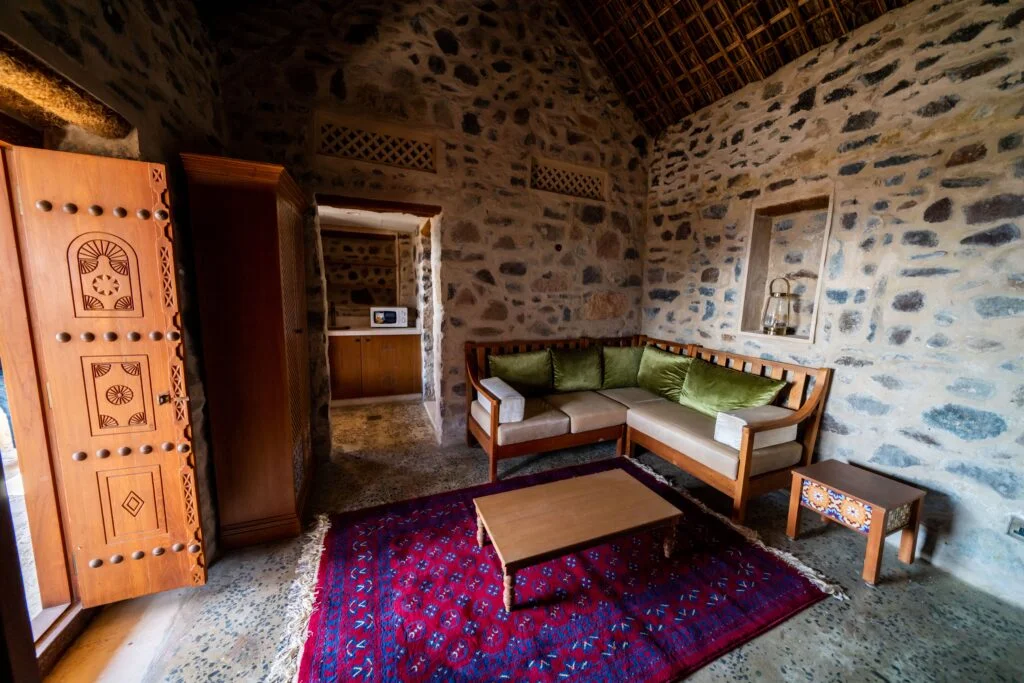
The answer reveals itself gradually through the settlement itself. What initially appears to be an improbable location begins to feel inevitable once its earlier purpose understood. Used as a seasonal mountain refuge for villagers escaping floods and as a hideout during medieval Portuguese colonization, Najd Al Meqsar begins to explain itself through the very terrain that first makes it see unlikely. The steep slopes, the commanding views across the valley, and the defensive advantages offered by elevation become easier to understand when experienced firsthand. The mountain no longer feels like an obstacle that had to be overcome; it feels like the reason the settlement exists at all.
That shift creates one of the most distinctive emotions associated with Najd Al Meqsar: belonging. The stone houses do not appear placed upon the landscape. They appear to emerge from it. Their colours echo the surrounding mountains, their materials feel inseparable from the terrain beneath them, and their scale remains in quiet conversation with the environment rather than competing against it. In many heritage properties, history is displayed. Here, it feels inhabited.
Walking through the pathways between the restored buildings introduces another layer of the experience. The settlement carries a strong sense of continuity, creating the impression that life here has not been interrupted but extended. The stone walls, terraces, and viewpoints encourage reflection on the generations that once navigated these same slopes, relied on these same routes, and woke to these same mountain horizons. The distance between past and present feels unexpectedly small.
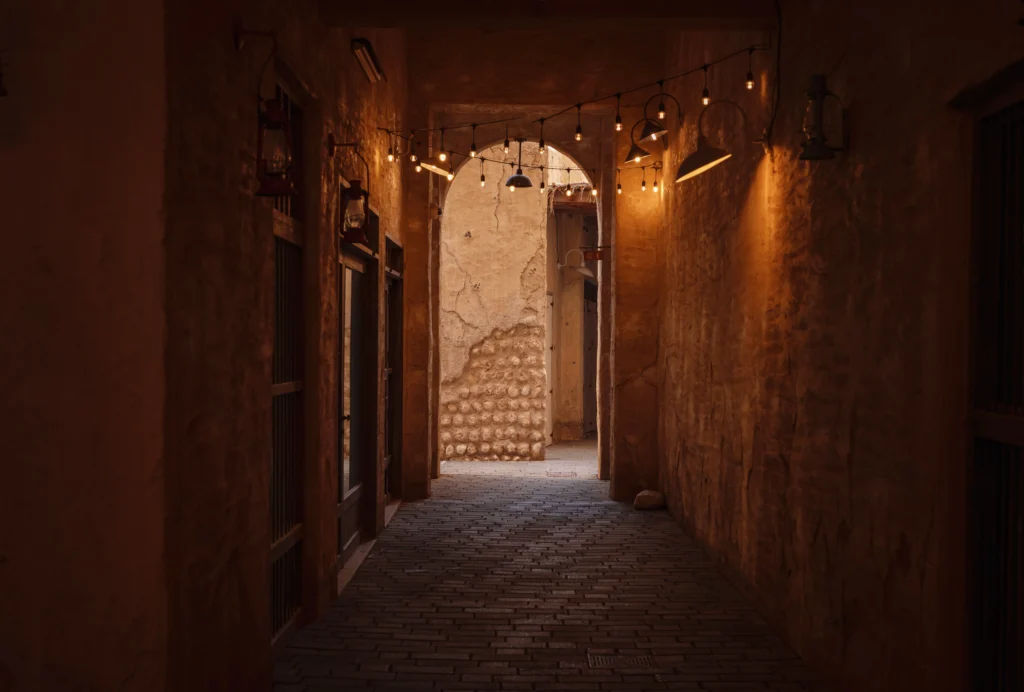
For visitors with an interest in architecture, the experience often produces a different form of admiration. Beyond the beauty of the setting lies an appreciation for the intelligence of the original site selection itself. Long before modern engineering, machinery, or transportation networks existed, people identified this location as suitable for settlement and succeeded in creating a community within a landscape that remains challenging even today. The achievement is not simply visual. It is deeply practical, revealing an understanding of geography, climate, and survival that continues to command respect.
Yet the strongest moments are often the quietest ones. Sitting above the valley in the early morning, watching light gradually move across the mountains, or observing how shadows reshape the landscape throughout the day creates a feeling that extends beyond relaxation. The experience encourages a sense of perspective. Concerns that dominate daily routines often lose some of their urgency when viewed against the scale of the surrounding terrain. The mountains do not provide answers, but they have a way of changing the size of the questions.
This combination of awe, belonging, continuity, and perspective gives Najd Al Meqsar its distinctive character. The stay is not memorable because it offers an escape from the landscape, but because it deepens engagement with it. Every element, from the architecture to the positioning of the settlement itself, reinforces a relationship between people and place that feels increasingly rare in contemporary hospitality.
Long after the details of the stay begin to fade, one impression tends to remain. Najd Al Meqsar does not feel like a property that could exist anywhere else. It belongs to its valley, its mountains, and its history so completely that separating them becomes impossible. That sense of permanence, shaped over generations and preserved within the landscape itself, is ultimately what makes the experience so compelling.