


Before any historical dates are learned, before the guided tour begins, and before the architectural details have had time to reveal their significance, attention is drawn elsewhere. Sunlight falls into the central courtyard from above, crossing painted walls that have become inseparable from the identity of the building itself. Voices travel through open corridors. Wooden shutters frame small fragments of sky. The house feels unexpectedly alive, not in the sense of activity, but in the sense of continuity. Nothing about the atmosphere suggests a place that has been frozen for preservation. Instead, it feels as though life has simply continued here for longer than expected.
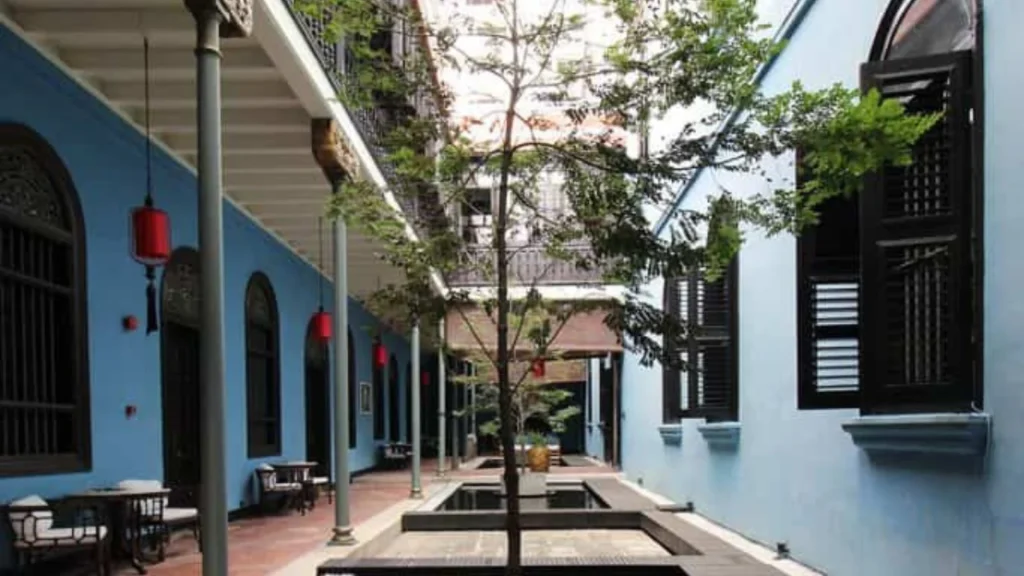
That sensation is particularly striking in George Town, Malaysia, a city whose character was shaped by movement. Traders, migrants, craftsmen, merchants, sailors, and families arrived from different parts of Asia and beyond, bringing with them languages, traditions, architectural ideas, and ways of living that gradually became woven into the identity of Penang itself. Walking through the Blue Mansion creates the feeling of stepping into that story rather than merely reading about it. The building does not stand apart from George Town; it feels like one of the clearest expressions of the city’s cultural memory.
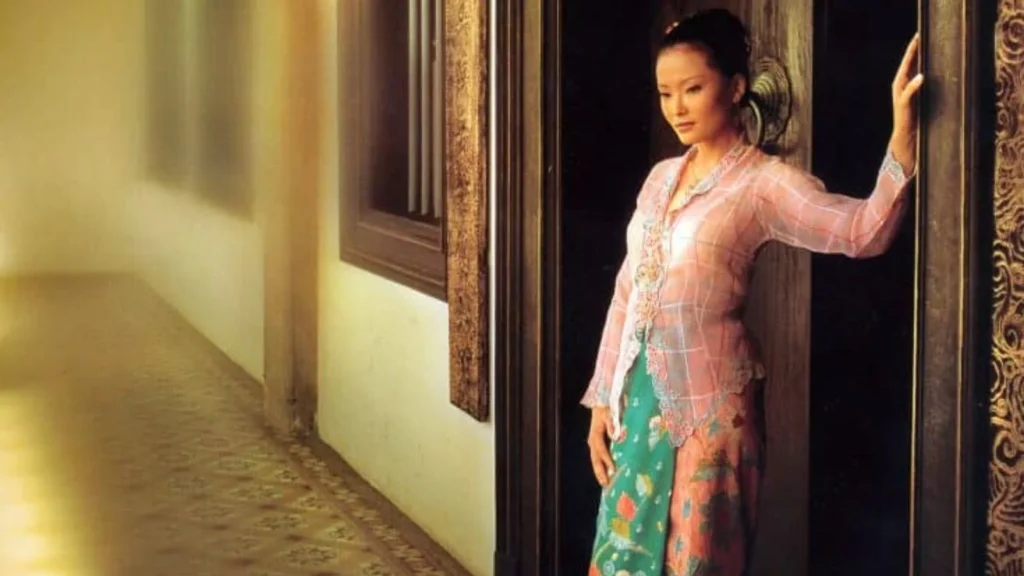
The emotional response begins with curiosity. Every courtyard seems to suggest another layer of history, every carved screen appears to conceal a story, and every transition between spaces raises questions about the people who once occupied them. Curiosity gradually evolves into admiration as the scale of the achievement becomes clearer. The mansion is beautiful, but beauty alone does not explain its impact. What remains impressive is the human ambition behind it: the confidence required to imagine such a place, the craftsmanship required to construct it, and the cultural complexity required to bring so many influences together without losing cohere
The mansion reveals itself most clearly through repetition rather than first impressions. Returning to the courtyard at different hours produces a surprisingly different experience each time. Morning light softens the blue walls and highlights architectural details that disappear later in the day, while the evening atmosphere draws attention toward shadows, textures, and quieter corners of the house. The building rewards lingering. Details that initially seem decorative gradually become meaningful, encouraging a slower rhythm of observation than many contemporary hotels allow.
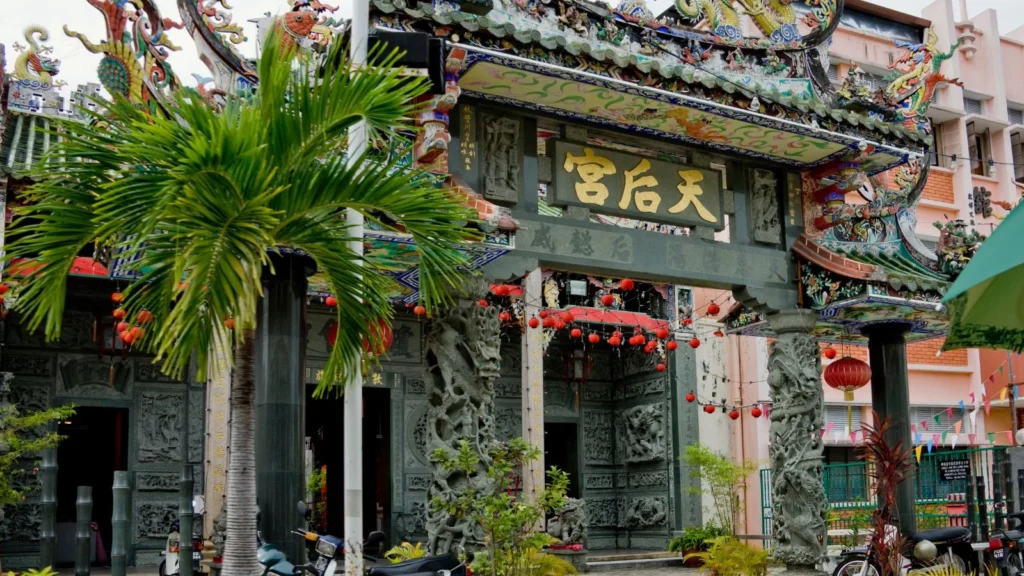
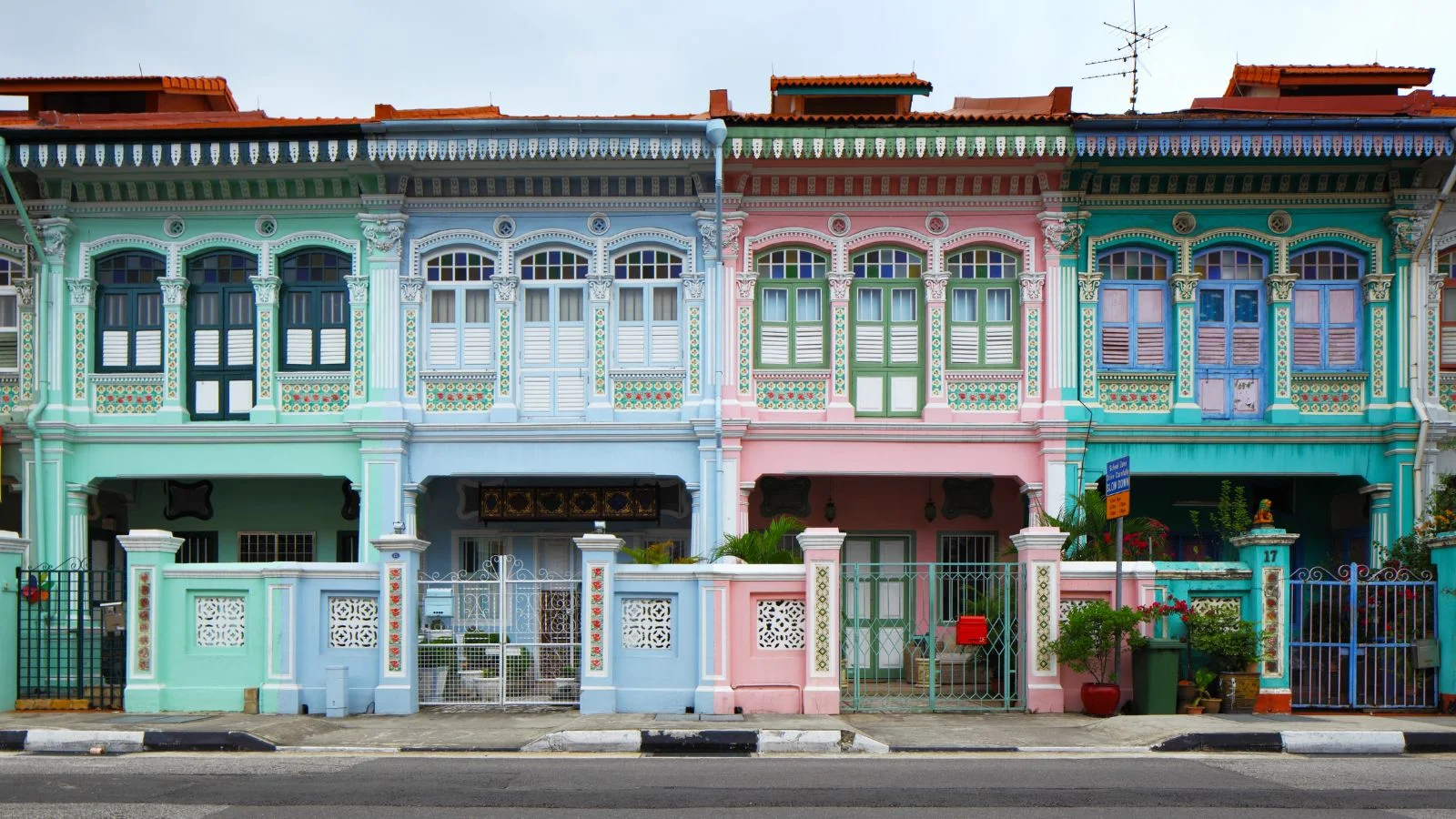
That rhythm extends naturally into George Town itself. Leaving the mansion and stepping into the surrounding streets creates an unusual sense of continuity because the experience does not end at the entrance. The same cultural influences that shape the architecture continue throughout the city in the form of shophouses, temples, cafés, clan houses, markets, and everyday street life. The mansion functions less as accommodation and more as an introduction to the wider character of Penang, offering a framework through which the city becomes easier to understand.
This connection between stay and destination may be one of the property’s greatest strengths. Many hotels provide separation from their surroundings, creating self-contained environments that could exist almost anywhere. The Blue Mansion achieves the opposite. Time spent within its walls deepens appreciation for George Town, while time spent exploring George Town enriches the experience of returning to the mansion. The relationship feels reciprocal, allowing each to illuminate the other .
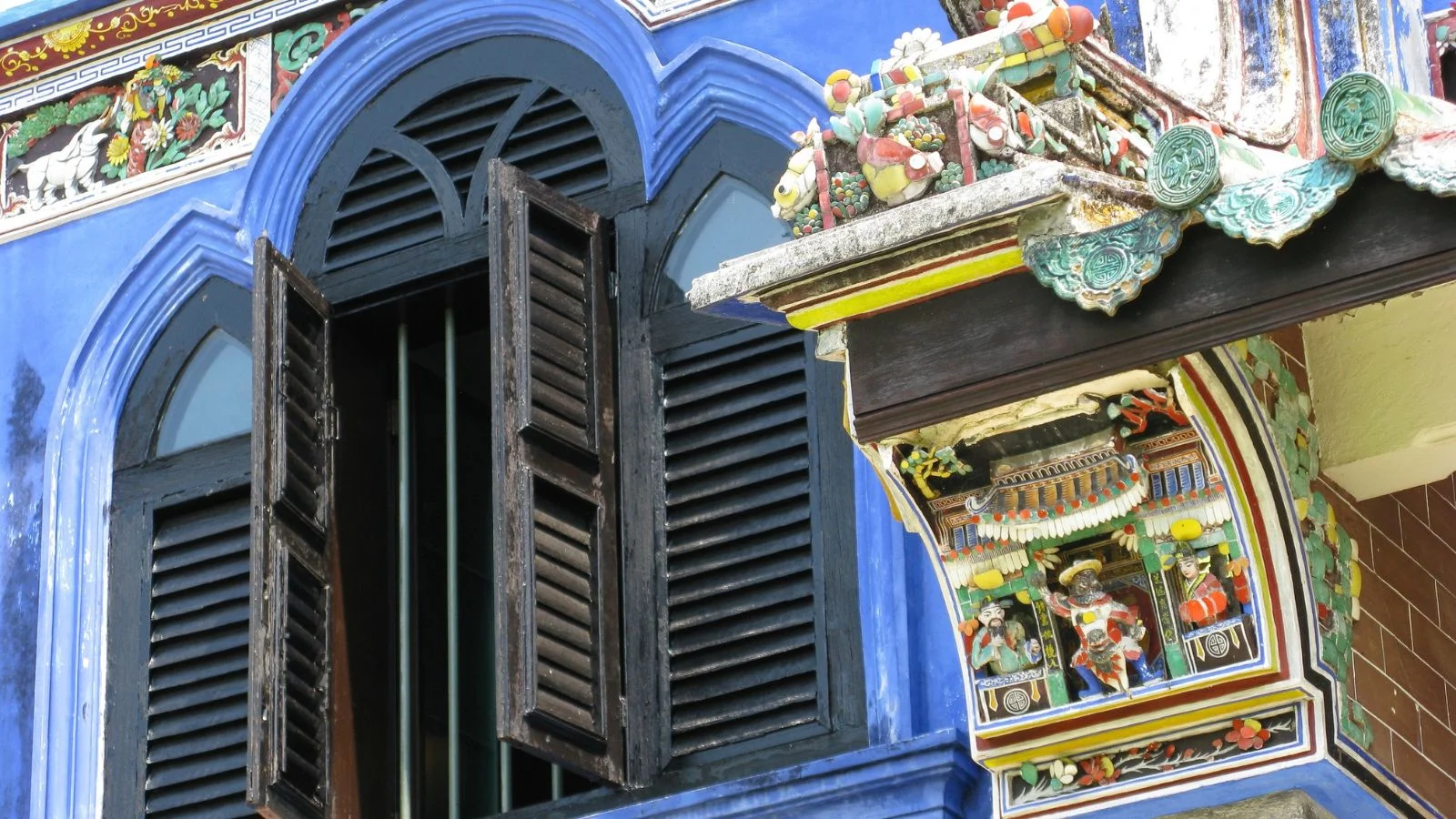
What lingers most, however, is not admiration for the building itself but a growing awareness of the culture that produced it. The Blue Mansion stands within George Town as a reminder that Penang’s identity was never formed by a single tradition, but through generations of exchange, adaptation, craftsmanship, and coexistence. The carved timber screens, imported materials, Chinese influences, European details, and local craftsmanship do not compete for attention; they exist together as evidence of a culture comfortable with complexity. For travelers drawn to history, architecture, and place, the experience often evolves into something deeper than appreciation. A sense of belonging emerges unexpectedly, not from familiarity, but from recognizing how strongly a community can remain connected to its heritage while continuing to evolve. The pride embedded within the mansion is not displayed through monuments or declarations but through preservation itself, through the decision to maintain craftsmanship, stories, and architectural knowledge across generations. In that sense, The Blue Mansion becomes more than a heritage stay. It becomes a living expression of cultural continuity, offering a rare opportunity to experience history not as something observed from a distance, but as something that remains actively woven into everyday life.