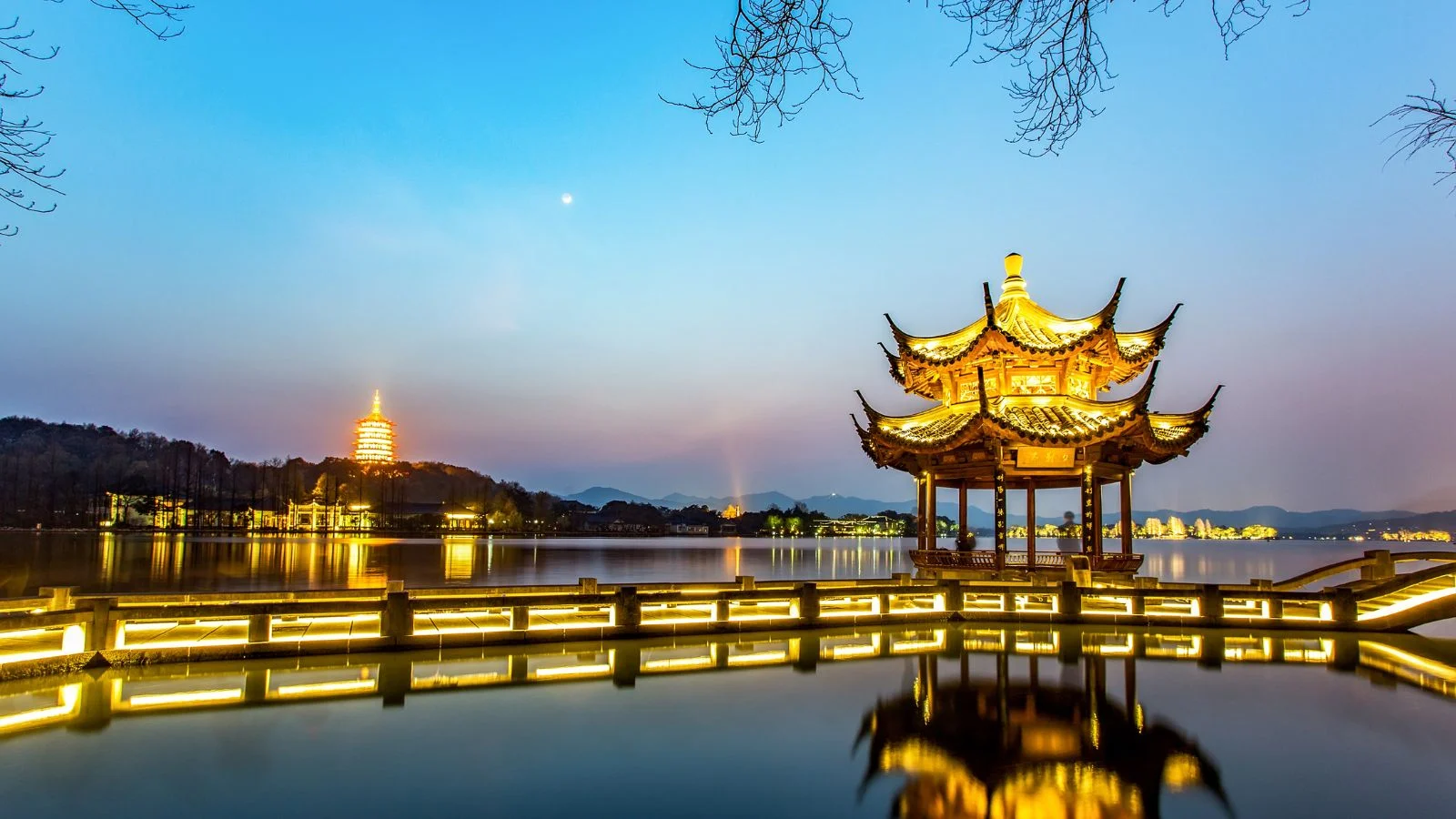
Around West Lake, Hangzhou brings tea culture, neighbourhood life, nature and contemporary city energy into unusually close proximity. Mist settles over West Lake in the morning, softening the opposite shore and muting a city that has already begun to wake behind it. Beneath the trees, the first walkers follow the water. Boats sit quietly offshore. The streets leading towards the lake are opening for the day.
A few hours later, the same waterfront can feel entirely different. Boats cross the water, stalls draw small crowds, photographers work along the promenade and music appears where there had been quiet. Beyond the shoreline, older streets give way to polished cafés, restaurants and contemporary shopping centres before the city seems to fold back into an earlier architectural rhythm.
This is what makes West Lake more interesting as a place to spend time than as a landmark to visit. Its landscape may be Hangzhou’s most recognisable image, but the experience extends beyond the water. It lies equally in the neighbourhoods around it, in tea and food, in ordinary routines and in the unusual proximity of nature, cultural tradition and contemporary urban life.
The Everyday Route to the Lake
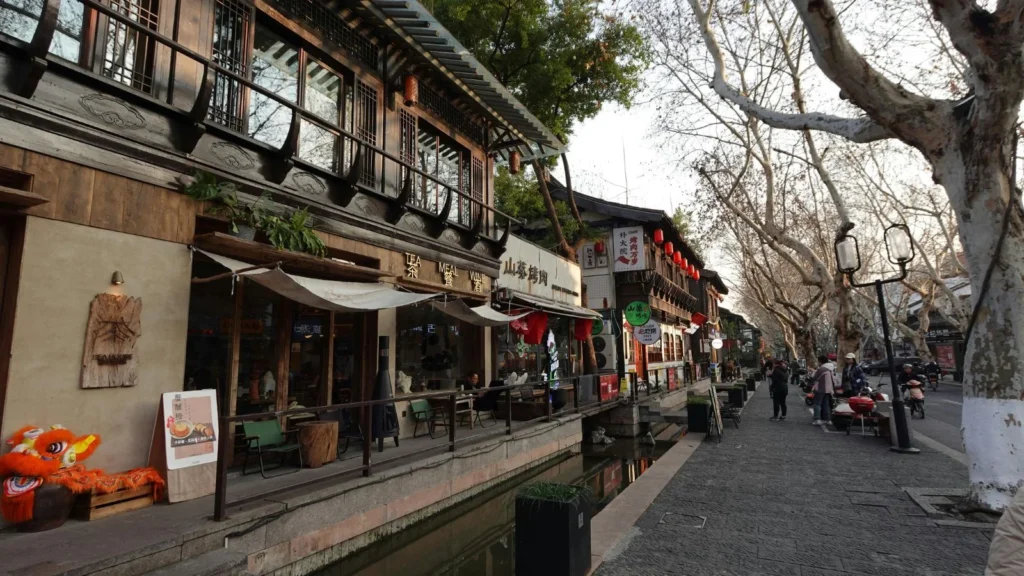
A stay near West Lake allows the landscape to become part of the day rather than a destination that requires planning. On the eastern side, streets such as Xueshi Road connect the waterfront with a neighbourhood of hotels, restaurants, pharmacies and small businesses. Some buildings and shopfronts carry an older architectural character; others have been adapted into contemporary commercial spaces. Tea shops sit within the same everyday landscape as clothing stores, food shops and modern cafés.
The interest is not necessarily in any single business. It comes from moving repeatedly through a neighbourhood that initially feels unfamiliar and gradually begins to acquire its own landmarks.
A pastry shop might become recognisable because its kitchen is visible through the glass, allowing passers-by to watch sweets being shaped and decorated. A tea house becomes somewhere to stop briefly rather than an experience that has to be scheduled. Pharmacies, small food shops and familiar corners begin to mark the route towards the water.
This is one of the quieter pleasures of staying rather than passing through: the destination begins to accumulate ordinary references. Practical life remains close at hand. Restaurants and supermarkets sit alongside cafés and tea houses, while the modern commercial areas near the lake provide Chinese and international dining. For travelers who do not want every meal to become a cultural exercise, that variety matters. Lunch can be as simple as a sandwich, pastry or familiar restaurant before the day continues outside. The malls themselves need not become an activity. Their value is partly that they make a longer urban stay easy.
A Lake That Keeps Changing
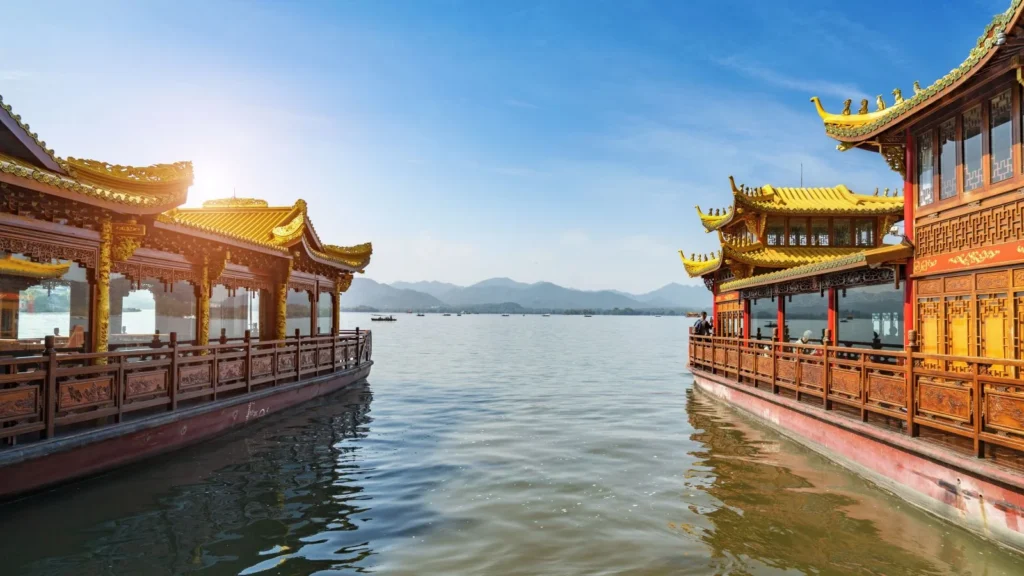
West Lake does not hold a single atmosphere. In the morning, cooler air, trees and mist can make the shoreline feel spacious and subdued. Later, the promenade becomes increasingly social. Traditional-style boats move across the lake, while others wait near the shore before carrying passengers onto the water. Music sometimes accompanies the scene, drawing people towards a boat or performance before the crowd disperses again.
Along the pedestrian areas, stalls introduce another layer of activity: accessories, scarves, decorative pieces, food and small goods. Elsewhere, young people pose in historical-style Chinese dress while photographers construct elaborate portraits against the landscape. Small events and performances periodically change the character of the waterfront again.
The result is not the silence often associated with slow travel. West Lake can be busy, commercial and animated. What it offers instead is the freedom to remain attentive without needing to keep moving to a new attraction. A walk along the same shore does not necessarily produce the same experience twice.

Where Old and Contemporary Hangzhou Meet
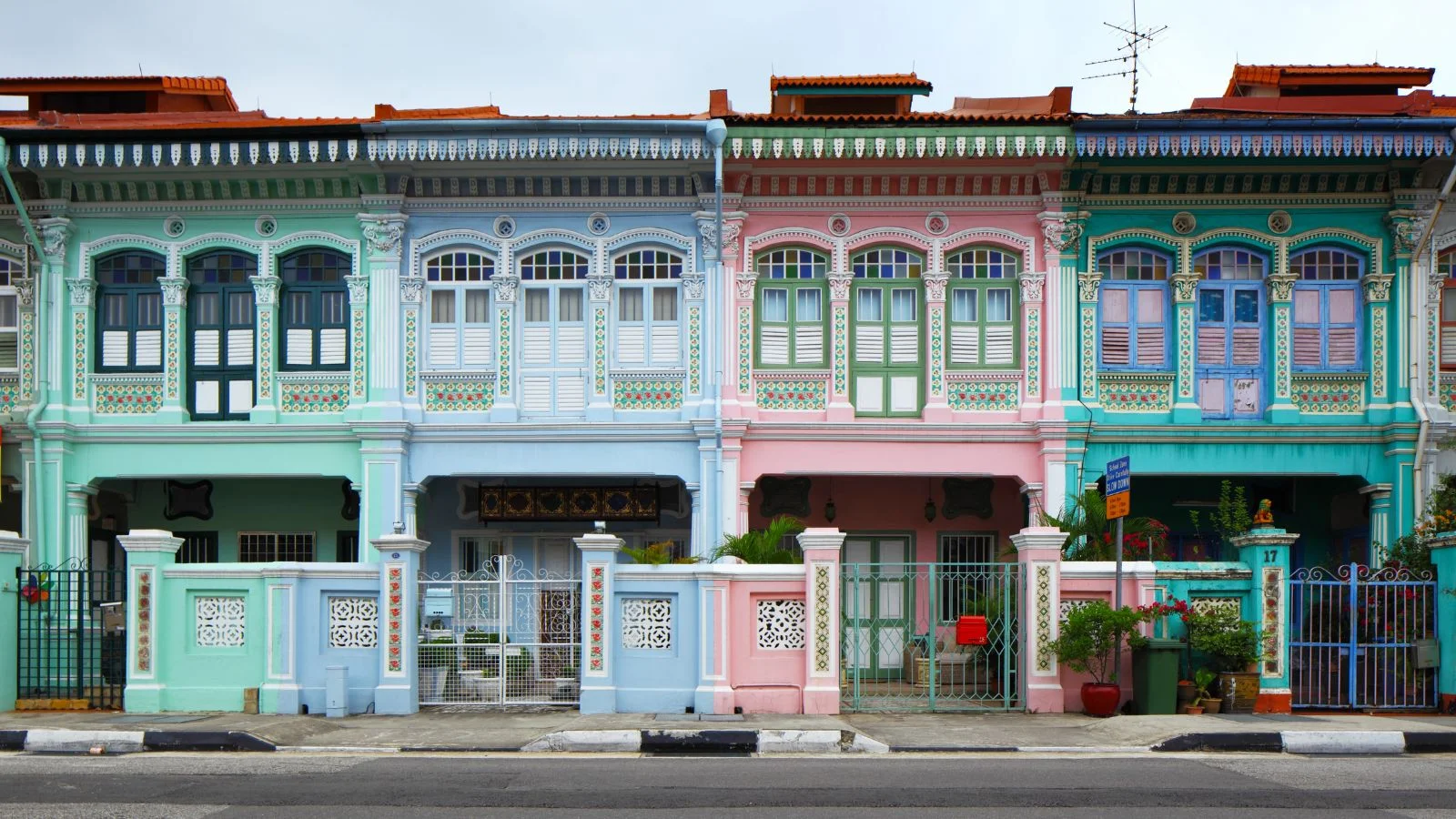
One of the more distinctive qualities of the West Lake area is how quickly the visual language of the city changes. A walk may begin among lower buildings and smaller shops, move into contemporary cafés and carefully designed interiors, and emerge near polished shopping centres and international luxury storefronts. Yet the transition rarely feels final. Continue walking and another older building or traditional-looking commercial frontage interrupts the modern streetscape.
Hangzhou does not require the traveler to choose between an imagined historic China and its contemporary urban life. Both are present.
This becomes particularly visible through food and commerce. Chinese pastry shops continue traditions of specialised sweets while presenting them through modern retail environments. Tea merchants operate alongside international restaurants. A historic-looking street may contain businesses whose interiors belong entirely to contemporary Hangzhou.
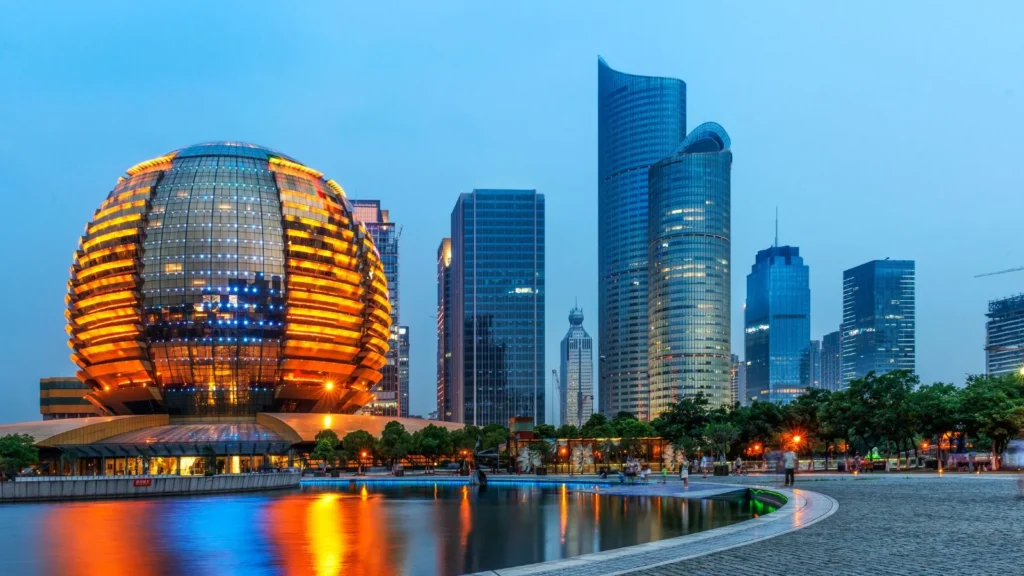
The contrasts are part of the place rather than something that needs to be edited out of the experience. Even the city’s larger urban identity remains close. Beyond the immediate West Lake environment, Hangzhou extends towards a very different skyline of high-rise buildings and modern development. Yet around the lake, nature and dense city life remain close enough that the transition between them can happen within minutes.
That proximity gives Hangzhou an unusual kind of range. Retreat from urban life is possible without leaving it entirely.
Tea Beyond the Teacup
Tea provides one of the strongest connections between West Lake and the landscape beyond its immediate shoreline. Within the neighbourhood, tea appears casually: in shops, tea houses and the small foods served alongside it. It does not have to begin as a formal cultural experience. It can simply become part of an afternoon.
Beyond the central waterfront, the tea-growing countryside surrounding Hangzhou reveals the agricultural landscape behind that everyday presence. Visiting the fields changes the context of what appears in cups and shops back in the city. The product belongs not only to a retail tradition but to the hills surrounding Hangzhou and to a much longer relationship between landscape and local culture.
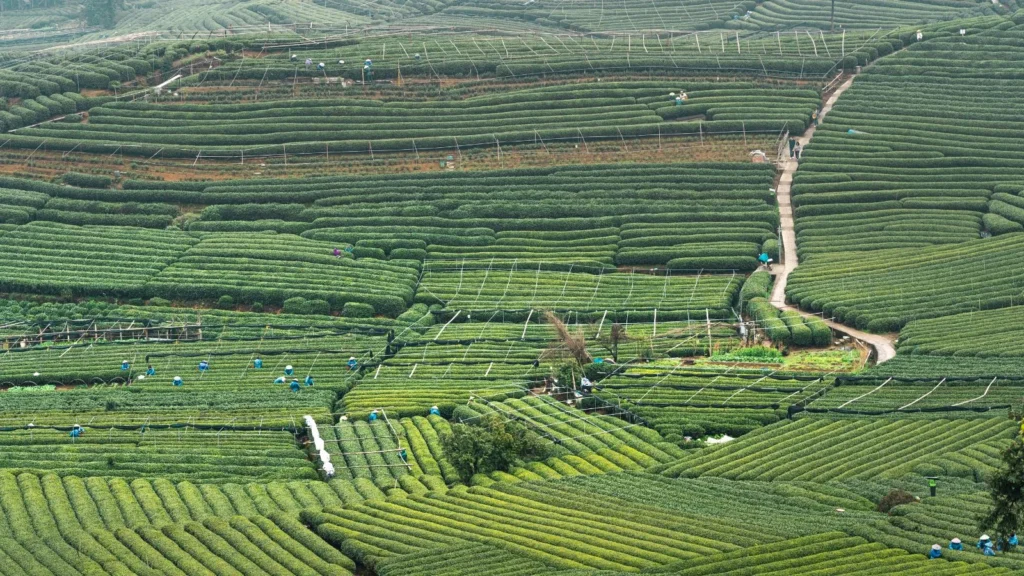
This is where the city begins to expand without losing its centre. A day can move outward towards tea-growing areas and still return to West Lake. Hangzhou’s transport connections also make more distant excursions possible, including journeys by rail to other cities. But accessibility does not turn the city merely into a base for elsewhere. The lake provides enough life to return to.
When the Water Becomes a Stage
Evening introduces another version of West Lake. The large-scale performance associated with the West Lake Impression tradition uses the water itself as part of its setting, bringing music, light and movement into a landscape that may have been experienced quietly only hours earlier.
The experience begins beyond the performance itself. Around the venue, restaurants, stalls and people walking through the surrounding area extend the evening into the neighbourhood. The lake becomes not simply scenery but part of Hangzhou’s cultural and social life after dark.
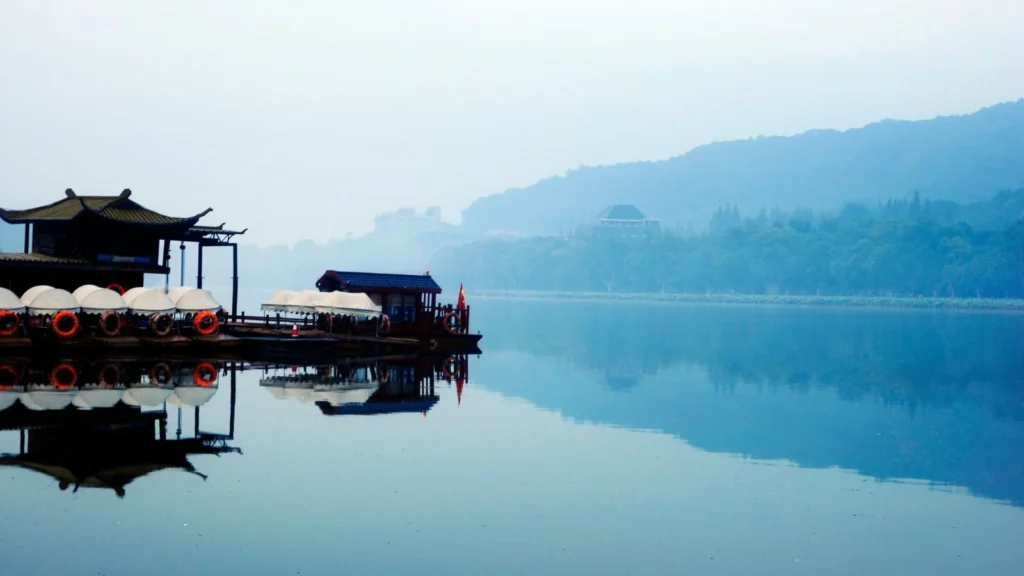
Elsewhere along the waterfront, weekends can bring public performances, music and groups dancing together. These moments are useful reminders that the value of West Lake is not dependent on tranquillity. People use it. They walk beside it, gather around it, photograph themselves against it, cross it by boat, perform beside it and return to it as part of city life. That human presence gives the landscape substance that beauty alone could not provide.
The Value of Staying
West Lake could easily be experienced as a sequence of recognisable sights: a walk beside the water, a boat ride, a tea excursion and an evening performance. What changes with time is not the number of things available to do, but the relationship with the place.
The route to the lake becomes known. A particular shop becomes familiar. The waterfront encountered beneath morning mist is recognised again when it fills with music and people. Tea moves from something served in a cup to part of the surrounding landscape. Modern Hangzhou stops feeling like an interruption to the older city and becomes part of the same story.
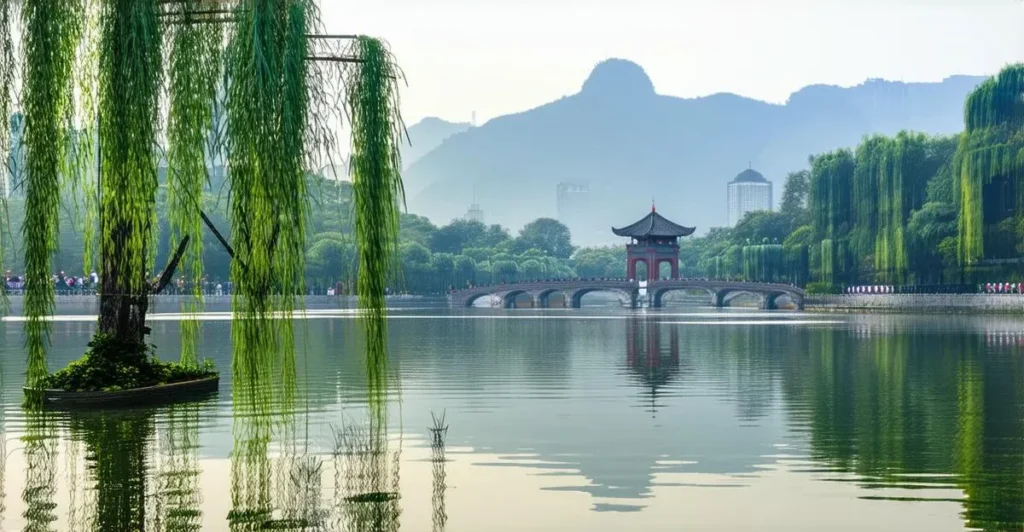
This is where West Lake fits a slower form of urban travel particularly well. It offers variety without demanding constant relocation and cultural depth without requiring the city to behave like a preserved historic quarter. Hangzhou remains busy, modern and inhabited. West Lake simply creates enough space within it to notice.