

Desierto Azul did not begin with an idea for a hotel. It began with a way of living, and the four rooms came later. There is a particular kind of fatigue that travel does not always solve: too many decisions, too much stimulation, too much attention required simply to move through the day. Desierto Azul approaches rest from a quieter direction.
Before moving to Todos Santos, Nilú and Fabrizio had already begun reconsidering what they ate, where food came from, how their surroundings affected them, and what they wanted daily life to feel like. The Mexican-Italian couple had lived in Italy and San Francisco before a first visit to Todos Santos brought those questions into focus. Here, desert, ocean, agriculture and a slower rhythm existed close enough together to suggest not a temporary escape, but somewhere to live. They eventually made the move, and when Desierto Azul opened in November 2021, the hotel grew from choices they had already made for themselves.
That history matters because many of the things now associated with boutique wellness hospitality can feel assembled after the fact: natural materials, organic food, filtered water, quiet spaces, a language of restoration. At Desierto Azul, they belong to the same philosophy that brought its owners to Todos Santos in the first place. The experience is less about entering a wellness program than finding a few days in which the surroundings ask less and daily routines become unusually uncomplicated.
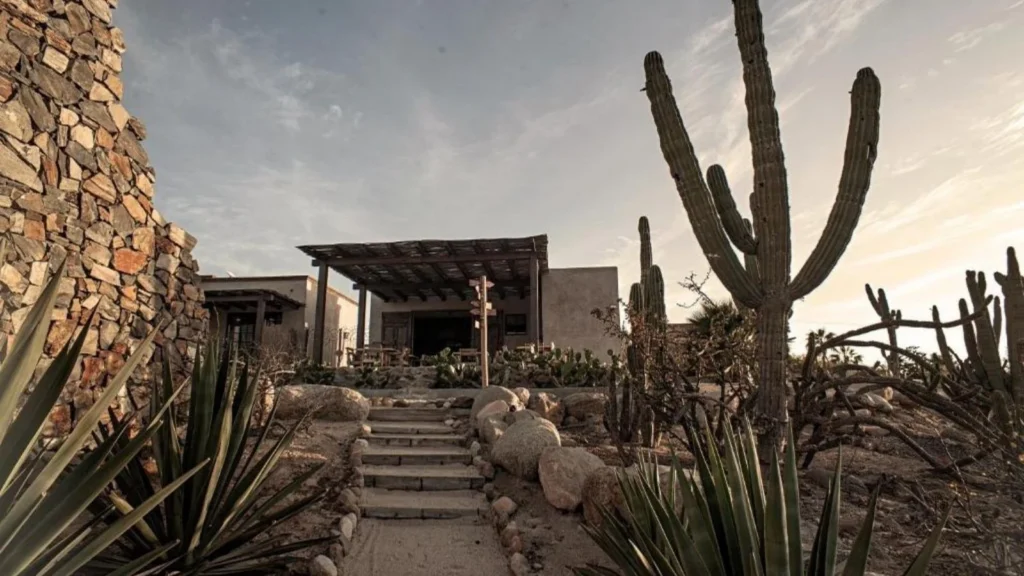
The transition begins before the room. Desierto Azul sits along Camino a Las Playitas, outside the concentration of the historic center, where buildings loosen and the desert becomes increasingly present. The property does not attempt to screen that landscape away. Cactus and dry ground remain visible between structures, mountains sit across the horizon, and terraces open directly toward the surrounding terrain. With only four rooms, arrival has little of the choreography of a conventional hotel. The scale is immediately legible: this is a small place occupying a small part of a much larger landscape.
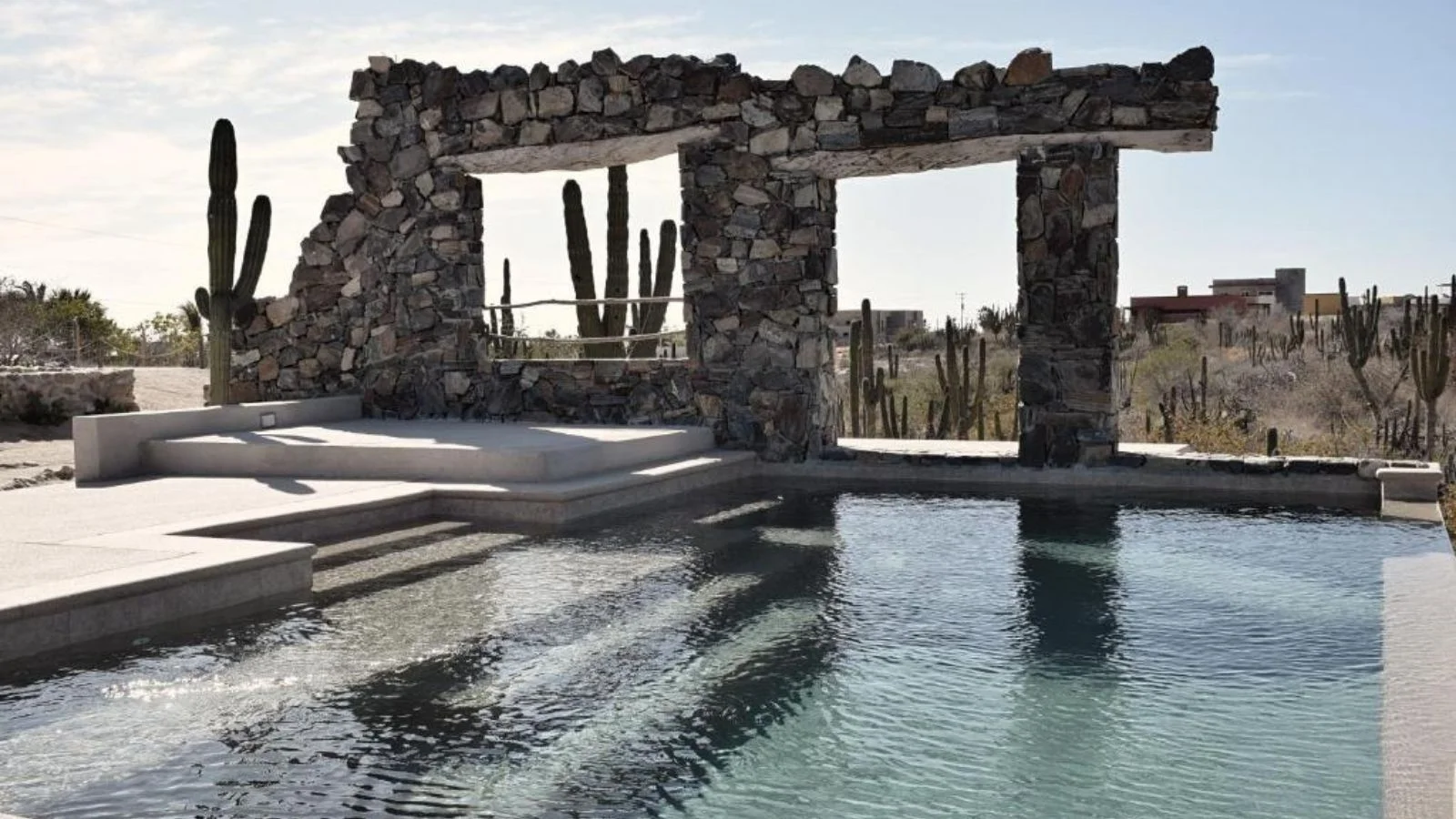
Fabrizio designed the property himself, taking cues from that landscape rather than imposing a separate visual identity on it. Earth-toned surfaces, polished concrete, wood, stone and woven palm details sit among desert plants, while the restrained architecture allows much of the visual work to be done by what already surrounds it. A barefoot terrace faces outward rather than inward. The saltwater pool lies against stone and cactus rather than a manicured resort garden. Inside the rooms, organic cotton, natural textures and simple furnishings continue the same restraint. Nothing appears designed to compete with the desert for attention.
The four-room scale also changes the human experience of staying here. Nilú and Fabrizio live on the property and remain involved in its daily life, collapsing some of the distance that normally exists between the people who conceive a hotel and those who eventually occupy it. Hospitality can therefore take the form of a conversation about where to eat that week, an encounter on the property or a cooking class led by Nilú rather than a sequence of interactions delivered through a formal service structure. Recognition happens quickly in a place this small. Anonymity, one of the pleasures of a large hotel for some travelers, is not really the point.
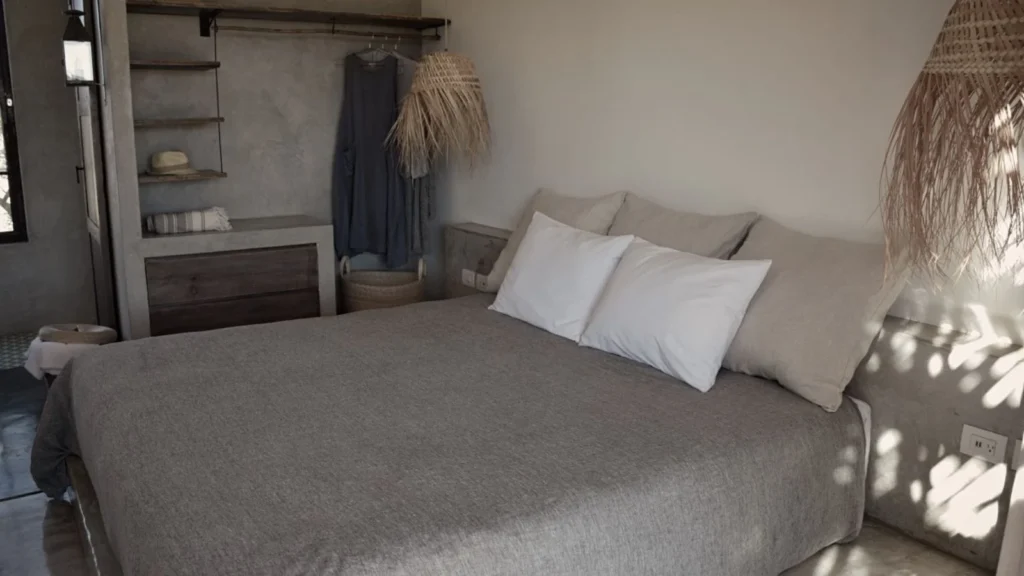
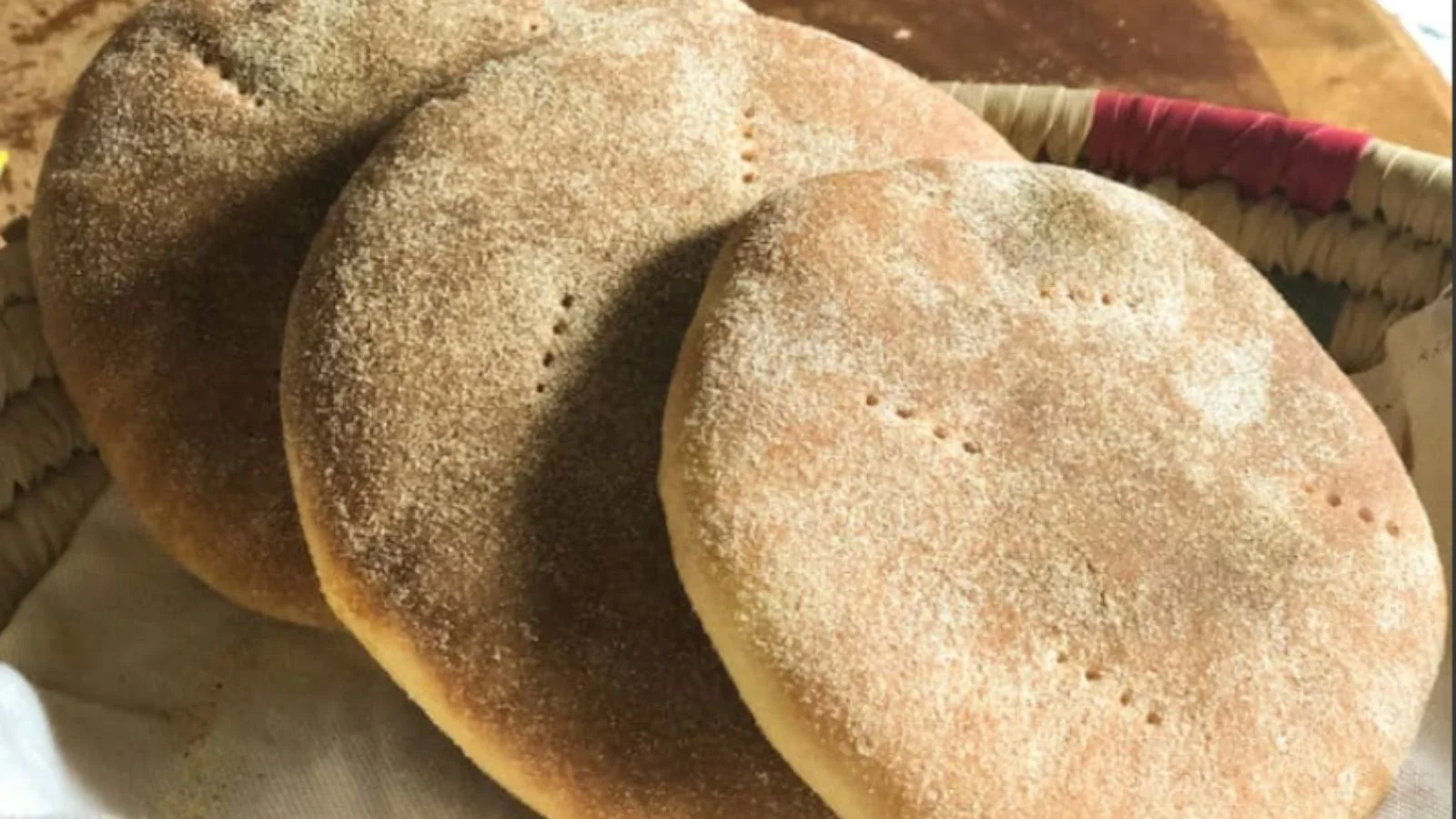
Much of the property’s philosophy becomes clearest through food. Nilú’s Plant-Based Cooking Studio turns an interest in ingredients into something participatory, with hands-on classes informed by her work in culinary nutrition. PanVero, the gluten-free bakery and elixir bar that followed, extends that idea beyond hotel guests and into the surrounding community. Food here is therefore neither confined to breakfast service nor presented as a prescribed retreat regime. It can enter the stay through a class, something baked that morning, coffee prepared slowly in the room, or simply greater attention to ingredients without requiring the entire visit to revolve around wellness.
That distinction is important. Desierto Azul uses the language of restoration, but the more convincing part of the experience lies in small, practical decisions rather than promises of transformation. Filtered drinking water from the tap, refillable bath products, organic cotton sheets and pour-over coffee are modest interventions individually. Together, they reduce the low-level friction that often follows travelers from one place to another. The luxury is not abundance. It is the ease of moving through a day without having to negotiate every detail of it.
This could easily have produced a property that turns inward, particularly in a destination increasingly associated with wellness. Instead, Desierto Azul works best when it remains in conversation with Todos Santos. The historic center, desert roads and Pacific coast occupy different parts of the same stay, and the hotel leaves room for movement between them rather than asking to contain the experience. PanVero adds another small point of connection by serving both guests and locals, while the property’s location along Camino a Las Playitas places the surrounding landscape into everyday reach.
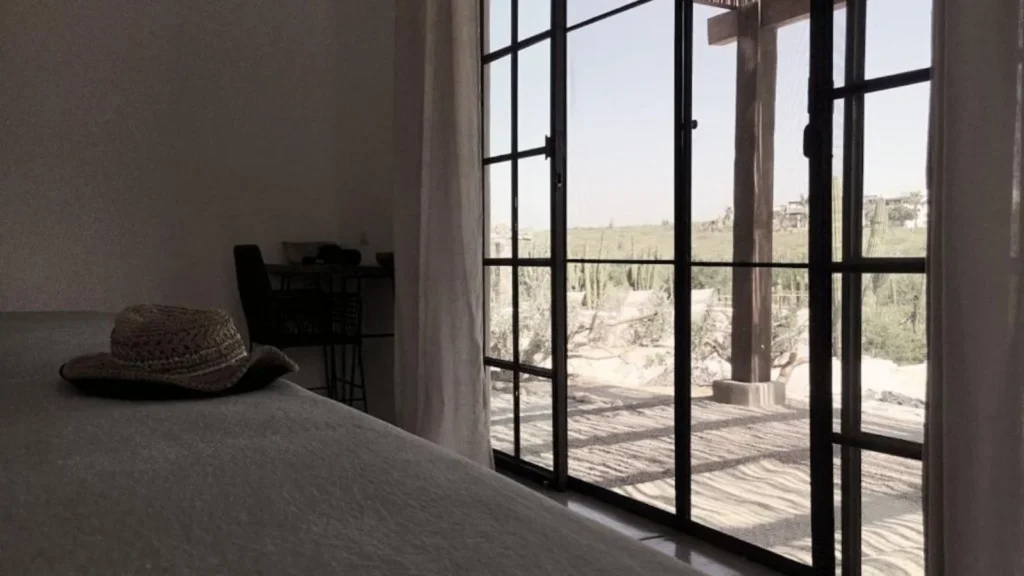
That relationship matters because Todos Santos itself rewards familiarity more than accumulation. Time here is shaped less by a dense sequence of attractions than by returning to town, driving toward the coast, recognizing a road, revisiting a café, or allowing the desert and Pacific to become part of the day without needing to turn either into an event. Desierto Azul supports that rhythm without trying to replace it. The hotel remains an anchor: somewhere to return to, not somewhere that makes leaving unnecessary.
The town is no longer outside the attention of international travel and hospitality, and Desierto Azul itself has received recognition from publications and guides including Michelin Guide, Forbes, Hotels Above Par and Condé Nast. Yet its value is not dependent on the idea of discovering somewhere unknown. What remains interesting is the scale at which it operates within a destination that is changing: four rooms, owners who still live where they host, and a property whose strongest experiences are tied to practices that existed before they became amenities.
A stay can therefore hold remarkably little structure. A cooking class may become the most deliberate event of a day, followed by hours elsewhere in Todos Santos or along the Pacific. Another day may contain nothing at the property beyond breakfast, the pool and the return from town. The hotel does not need to fill those spaces. Its role is to make a slower rhythm easier to maintain, providing enough substance to shape the stay without requiring itself to become its subject.
That makes Desierto Azul a particular proposition. It is unlikely to satisfy travelers looking for the anonymity, service range or constant activity of a larger resort, nor does its four-room intimacy leave much distance between guest and host. The appeal lies elsewhere: in staying somewhere where design, food, hospitality and landscape appear to belong to the same idea rather than operating as separate hotel departments.

For The Travlish, that is what makes Desierto Azul interesting as Stay Culture. It does not offer an escape from Todos Santos and it does not need to manufacture a lifestyle around the guest. It makes a quieter, more familiar way of inhabiting the destination easier — close to the desert, connected to town, attentive to food, and small enough for repetition to become part of the stay. The hotel came after the life. Staying there simply opens a small part of that life to someone else.